
June 15, 2026
July 20, 2026
Everything You Need to Know About the Dailly Sale to Optimize Your Company's Cash Flow

Running a business involves accounting realities that can sometimes be complex, and a lack of immediate cash flow often hinders many day-to-day development projects. The time lag between the delivery of a service and the actual payment of the invoice weighs heavily on the balance sheet of growing companies.
To address these recurring challenges, business leaders and CFOs are turning to short-term trade receivables financing solutions . A law passed in the early 1980s established a simplified mechanism allowing the transfer of ownership of trade invoices to a credit institution. This process offers an attractive alternative to traditional bank financing, which often requires substantial personal guarantees or processing times that are incompatible with the urgency of the situation on the ground.
How exactly does this tool work, and what are the nuances you need to master for your organization? Dive into the heart of an indispensable—yet sometimes inflexible—financial tool, and discover new, modern alternatives.
The fundamental mechanisms of the Dailly transfer
The implementation of this system is based on a precise legal framework that safeguards the relationship between the assigning company and the financial institution. At the heart of the system is a single document known as the Dailly statement, which summarizes all the assigned trade receivables. This mandatory document must include specific legal provisions to be valid under the law and in the eyes of the tax authorities.
The Role of the Statement and the Assignment of Claims
To initiate the financing, the company provides its bank with a detailed list of unpaid invoices it holds against its business or government customers. The statement instantly records the transfer of ownership of the receivables in their entirety, without the need for tedious individual formalities. The bank then becomes the new rightful owner of the amounts owed and is responsible for collecting the funds on the scheduled due date. This initial administrative simplicity is particularly appealing to managers of small businesses who lack the time to handle complex paperwork. However, the bank retains a right of recourse against the assignor if the ultimate debtor fails to pay, which leaves the risk of non-payment on the company’s shoulders.
Notification and Acceptance by the Debtor
Your relationship with your customers may take a different turn depending on the level of formality chosen when the contract is established. The bank may decide to simply inform your customer of the transaction via an official written notice. This notice prohibits the customer from paying the invoicing company directly, under penalty of having to pay twice. In certain stricter cases, the financial institution requires formal acceptance from the debtor to ensure that no commercial dispute will block future payment, including when it comes tocancel an invoice that has already been assigned due to an error.
ℹ️ Let’s take the example of an IT consulting SME that is carrying out a three-month project for a large public entity. Faced with an administrative payment term of sixty days, the company uses the Dailly factoring service to immediately receive 80% of the amount owed, thereby enabling it to pay its consultants’ salaries without waiting for the government’s payment.
The key differences from other forms of receivables financing
The market for working capital financing offers several options that share similar objectives but operate differently. CFOs often confuse the Dailly mechanism with other working capital financing tools.
Dailly Factoring vs. Traditional Factoring
The main difference lies in the comprehensive and modular nature of the solution chosen for your day-to-day financial management. The assignment of receivables via a schedule is either a one-time transaction or part of an overall bank credit line negotiated annually. In contrast,traditional factoring generally involves entering into a comprehensive contract under which the company entrusts its entire accounts receivable portfolio to a specialized third party known as the factor. The factor then handles invoice reminders, collections, and dispute resolution, thereby freeing up sales time for internal teams. The Dailly approach ensures greater confidentiality regarding your customer portfolio if the bank chooses not to notify debtors. However, it offers significantly less protection against the risk of financial default by your buyers.
Flexibility that can be adapted to meet specific needs
The choice of tool depends directly on the maturity of your business and the structure of your accounting department. If you have a structured team capable of handling follow-ups, traditional banking solutions remain a viable option for localized cash flow needs. Fast-growing companies, on the other hand, seek comprehensive solutions that include credit insurance to safeguard their growth.
Is it wise to jeopardize your customer relationship just to secure short-term cash flow? The answer depends on the strength of your business relationship and the transparency of your communications with your partners.
The advantages and limitations of this banking solution
Like any management tool, this mechanism offers concrete opportunities but also involves technical constraints that must be analyzed objectively. Decision-makers must weigh the pros and cons before committing their organization to this financial path.
Using this lever offers immediate benefits for the company's financial health:
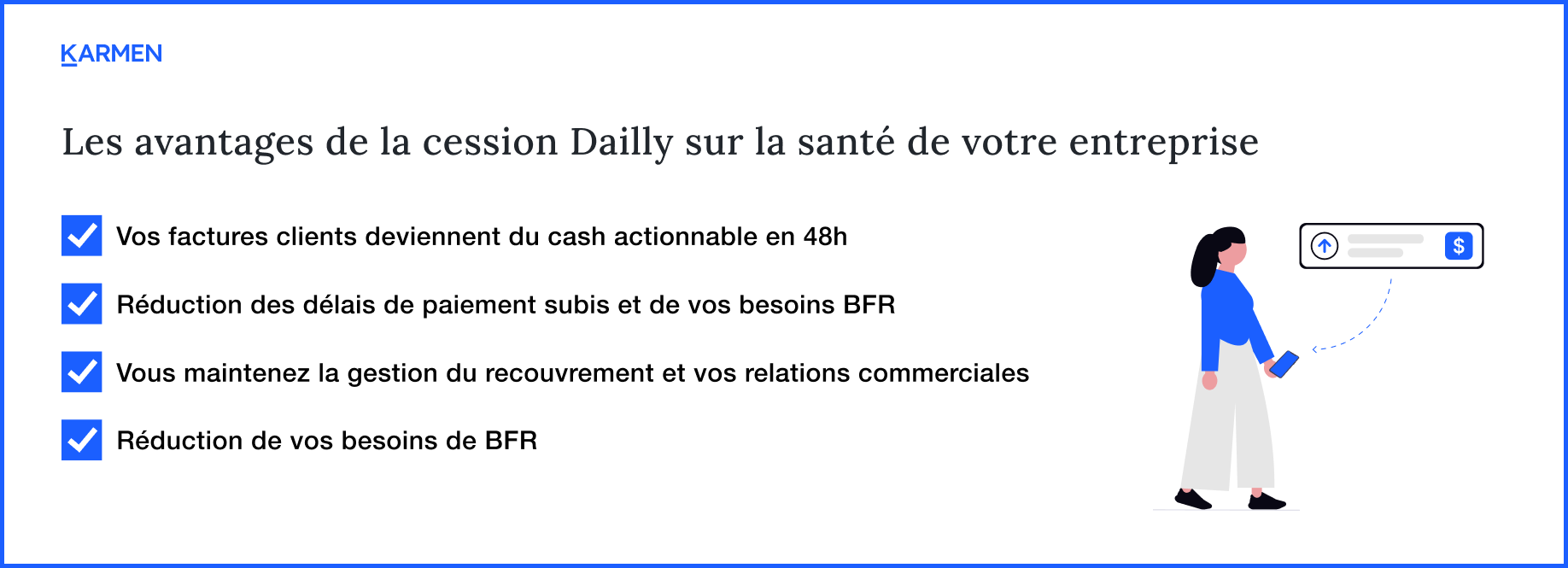
- Instantly turn your customer invoices into cash available in your checking account.
- A significant reduction in payment delays, which affect your working capital needs.
- The ability to negotiate discounts with your suppliers by leveraging your available cash.
- Maintaining control over the collection process to preserve close relationships with your customers.
Access to credit should not be an uphill battle, but rather a driver of growth for bold entrepreneurs.
However, the picture is not entirely rosy, and several major obstacles deter modern business leaders on a daily basis. The overall cost of the transaction includes processing fees, per-invoice factoring fees, and interest calculated on the amounts advanced. Furthermore, banks rigorously screen eligible receivables and systematically reject clients deemed too risky or startups without a track record. You must also provide substantial additional collateral, which increases the mental and financial burden on the business owner. To explore a detailed comparative analysis, it is helpful to examine the advantages and disadvantages of traditional factoring before making a final decision.
We launched Karmen Factor to modernize the financing of your invoices
Traditional banks rely on outdated administrative processes that hinder the growth of agile, connected businesses. To meet the needs of today’s small and medium-sized businesses, we’ve developed a high-performance, transparent technological alternative. Karmen Factor is reinventing access to working capital by offering B2B financing without invoice assignment that eliminates the red tape of traditional models.
Thanks to our platform, which connects directly to your invoicing and accounting tools, you’ll receive a response within 48 hours. We finance your cash flow needs without requiring personal guarantees and without disrupting the relationship of trust you’ve built with your long-standing customers. All your invoices are eligible as long as they’re in euros, even those from your international customers. Our solution adapts in real time to your business volume, offering you total flexibility on a daily basis.

How to Choose the Best Option for Your Business
Selecting the right financing partner requires a careful analysis of your financial metrics and your customer base. The selection criteria vary depending on whether you work with large corporations or small independent businesses.
Assess the actual cost and operational impact
You shouldn’t stop at the simple interest rate quoted by banks during initial sales discussions. You need to factor in all associated fees, such as notification costs, annual commitment lines, and retention fees. Operational analysis is just as crucial, as managing sales invoices requires time-consuming daily administrative rigor. Modern digital solutions automate these workflows and allow you to focus on the company’s core business. To gain a clearer understanding of the vast array of options on the current market, explore how to choose the right factoring solution based on your internal resources.
The Importance of Responsiveness When Choosing a Partner
When cash flow gets tight, every day counts, and the wait times for bank credit committees become unbearable. A business opportunity can slip away if you don’t have the funds needed to purchase raw materials or hire experts. Next-generation financing platforms useopen banking to instantly analyze your company’s financial health and release funds invoice advance almost immediately.
ℹ️ Imagine a fast-growing logistics company that lands a major contract with an e-commerce giant for the holiday season. By bypassing the red tape involved in traditional credit line negotiations, the CEO uses an online platform to finance his first invoices within 24 hours, allowing him to immediately hire 50 temporary workers.
Conclusion
The sale of trade receivables remains a powerful tool for optimizing working capital and safeguarding business operations in the face of late payments. Whether traditional or modernized through fintech, converting invoices into immediate cash provides a much-needed boost for growth.
Business leaders must balance the reassuring reliability of traditional banking institutions with the responsive flexibility of new online financing solutions. Which approach will you choose to unlock your business’s growth potential without feeling the pressure of tight payment deadlines? By identifying your actual needs and comparing options with an open mind, you’ll find the ideal solution to manage your cash flow with confidence and efficiency.


