
July 27, 2026
July 27, 2026
Digitizing Invoices in Chorus Pro

Do you bill a city hall, a hospital, or a public institution? As of January 1, 2020, paper invoices or PDFs sent by email are no longer accepted: all businesses, regardless of size, must submit their invoices through Chorus Pro. This free public portal, operated by the AIFE, has become the mandatory channel for getting paid by the government.
But between the accepted formats, processing statuses, and payment deadlines—which can still be lengthy despite the shift to digital—many leaders of microbusinesses and small and medium-sized enterprises are navigating these challenges without clear guidance.
Should you expect to get paid faster once you submit an invoice? Not necessarily.
Here’s how Chorus Pro works, what it actually changes, and how to secure your cash flow while waiting for payment.
Chorus Pro: A Requirement That Applies to Businesses of All Sizes
Chorus Pro has been in existence since 2017, initially reserved for large companies. The rollout schedule, established by a 2014 ordinance, was subsequently expanded in phases. As of January 1, 2020, the requirement applies to businesses of all sizes, including micro-businesses and the self-employed. There is only one rule: as soon as an invoice is sent to a public entity, it must be processed through this portal.
The scope is broad. The following are included:
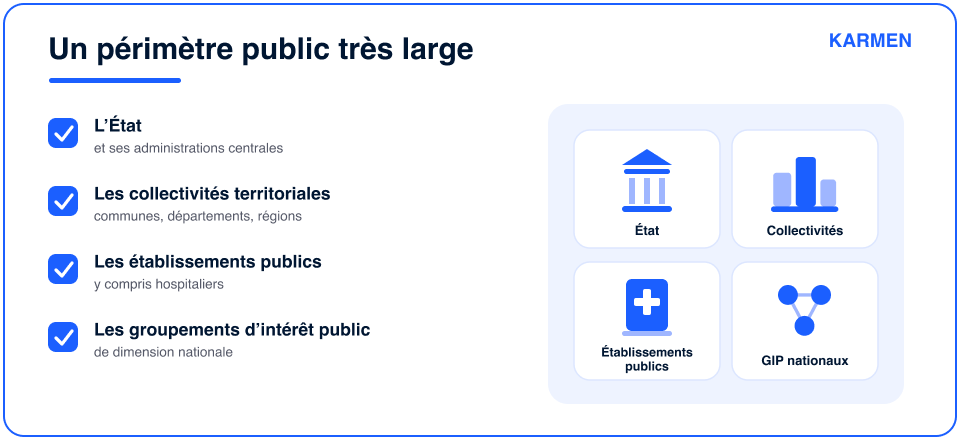
- The State and its central government agencies
- Local governments: municipalities, departments, regions
- Public institutions, including hospitals
- National Public Interest Groups
In practical terms, if a company submits a bid for a public contract—regardless of the amount—it must go through Chorus Pro to receive payment.
There are no exceptions based on company size or the amount of the payment. Even before submitting an invoice, the company must create a Chorus Pro account linked to its SIRET number and then obtain authorization from the public-sector client: without this authorization, the submission is simply blocked. This is an administrative step that many discover too late, when they go to invoice their first contract.
How to Upload an Invoice to Chorus Pro: Formats and Methods
There are three ways to submit an invoice. Manual entry directly on the portal is suitable for small volumes, but it is time-consuming: filling out each field by hand for a handful of invoices per month is manageable, but much less so for about thirty.
The file upload feature allows you to submit a PDF or a structured file. Three formats are accepted: Factur-X, a PDF that embeds machine-readable XML data, UBL, and CII. These formats will also be the standard for the upcoming B2B electronic invoicing reform, which explains why many invoicing software programs already support them.
The third method—EDI or API—directly connects the company’s invoicing software or ERP system to Chorus Pro. Invoices are automatically submitted each time an invoice is issued. This requires, beforehand, rigorous invoice management : consistent numbering, correct service codes, and precise contract references.
ℹ️ An office furniture manufacturer that sells to city governments through public procurement has connected its ERP system to Chorus Pro via an API. As a result, submitting an invoice now takes 2 minutes, compared to 20 minutes when entering data manually, and the risk of errors in the department code is virtually eliminated.
Important Note: Choosing the Correct Invoice Type. Chorus Pro distinguishes between down payment invoices, final balance invoices, and credit memos. Making a mistake regarding the different types of invoices will delay processing—sometimes by several weeks—while the error is identified by the administration.
Second point to note: An invoice rejected in Chorus Pro—due to an incorrect SIRET number, an erroneous service code, or an inconsistent amount—cannot be corrected by resubmitting a duplicate. You must correct a rejected invoice using a credit memo, and then issue a new, correct invoice. This attention to detail directly affects the speed of payment, and a poorly managed rejection can add several weeks to an already lengthy cycle.
Mandatory Information, VAT, and Archiving: What an Electronic Invoice Must Include
Whether the invoice is intended for a supplier, a private customer, or a government agency, it must include a set of mandatory details established by the Commercial Code and the General Tax Code. The date of issuance, the invoice number, the names and addresses of both parties, the nature of the service provided, the applicable VAT rate, and the total amount including tax are at the top of the list. Your invoice must also specify the payment terms: an invoice that omits any of these details may be rejected by the tax authorities or challenged during an audit.
Is my invoice compliant? An electronic invoice does not require a qualified electronic signature: the Factur-X format, by incorporating structured, machine-readable data, guarantees the document’s authenticity, unlike a simple scanned PDF.
This is the whole point of invoice digitization: ensuring data reliability, not just changing the medium—a factor that often reassures small businesses.
Another requirement that should not be overlooked:record-keeping.
Invoices issued and supplier invoices must be retained in electronic form, generally for 10 years in the case of accounting documents, which also facilitates accounting and collections in the event of a dispute.
Finally, two provisions directly address cases of late payment: the terms for discounts on early payment, and the penalties applicable in the event of late payment.
When such delays occur repeatedly, they primarily expose the client company to the late-payment interest discussed above, rather than to a direct fine: this serves more as a negotiating tool than as an automatic penalty.
Chorus Pro and the 2026–2027 B2B Reform: Two Initiatives, Two Timelines
Many companies confuse Chorus Pro with the upcoming widespread electronic invoicing reform for business-to-business transactions. However, these are two distinct systems:
- Chorus Pro covers B2G (billing a government agency), a requirement that has been in effect since 2020
- The Public Invoicing Portal and approved platforms cover B2B (invoicing another business), a requirement that takes effect in September 2026 for large companies and mid-sized companies, and then in September 2027 for small and medium-sized enterprises (SMEs), very small businesses, and micro-enterprises
So Chorus Pro isn't going away. In fact, it's becoming one of the free options for issuing B2B invoices through the public invoicing portal. A company that bills both government agencies and private customers will eventually be able to process both types of invoices using the same tool, or choose a separate approved platform for its B2B invoices.
Payment Terms in the Public Sector: What Digitization Changes (and Doesn't Change)
Submitting an invoice through Chorus Pro does not guarantee prompt payment.
The legal payment deadline is set by the Public Procurement Code: 30 days for the federal government and local governments, 50 days for public health care facilities, and up to 60 days for certain public enterprises.
After this period, late-payment interest accrues automatically, without the need for a formal notice: the ECB rate plus 8 basis points, plus a flat-rate penalty of 40 euros per late invoice.
In practice, the central government pays on average within 16 days, municipalities within 18.5 days, and departments within 19.3 days. Regions are slower, taking around 28.7 days. Public health care facilities, for their part, face structural difficulties in meeting their 50-day deadline.
ℹ️ An industrial cleaning SME that works for a public hospital has its invoice properly submitted and accepted on Chorus Pro. However, the service provided is not validated internally until three weeks later, which pushes back the start date of the 50-day legal payment period by that same amount of time. The payment, meanwhile, is not received until two months after the service was rendered, even though no rules were technically violated.
What should you do when the invoice has been properly submitted and accepted, but the payment is still delayed? This is precisely where digitization reaches its limits: it makes the processing workflow more reliable, but it does not speed up the decision to pay. In the meantime, an invoice advance allows you to avoid this cash flow gap, particularly in long-cycle public procurement contracts.
A properly submitted invoice is not the same as a paid invoice: cash flow doesn't come from Chorus Pro status updates—it comes from bank transfers.
We launched Karmen Factor to finance your invoices awaiting payment from the government
At Karmen, we see a lot of companies that do everything right: accurate invoices, flawless submissions to Chorus Pro, and strict compliance with regulations. And yet they still have to wait 45, 60, or sometimes even 90 days to get paid—especially when the service is delayed in being approved by the administration.
That's why we launched Karmen Factor: to finance these invoices—including those issued to the public sector— without assigning the debt. Unliketraditional ,, which is often perceived as rigid and intrusive in customer relationships, Karmen Factor adapts to the pace of public procurement: invoice by invoice, with no minimum volume commitment.
Is this relevant for all companies that work with the public sector? Not necessarily if the actual payment terms remain short, as is the case with the federal government or municipalities. It is more relevant for companies that bill hospitals, regional governments, or organizations whose internal processing times for service invoices are regularly getting longer.

Key takeaways
Chorus Pro has not been an option since 2020, regardless of company size.
Using it properly—with the right format, the right invoice type, and status tracking—reduces rejections and internal processing times.
However, digitization does not change the legal payment deadline or the administrative delays that may follow.
For a company that regularly bills the public sector, anticipating this cash flow lag is just as important as mastering the portal itself.


